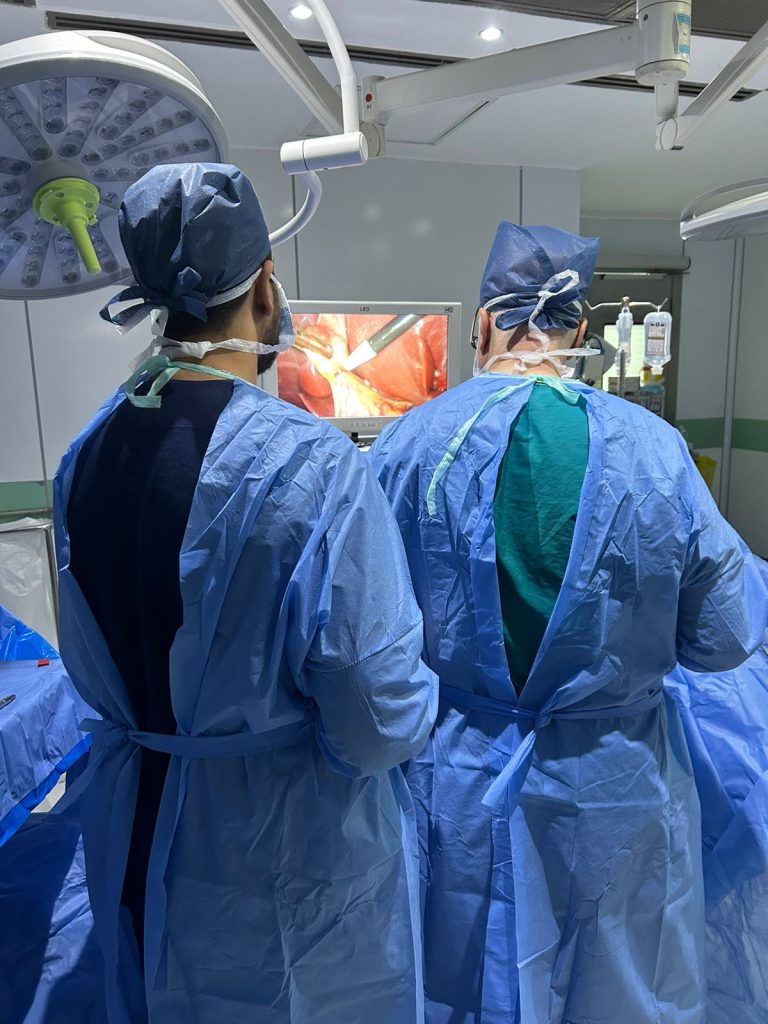
Many people think that seeing a general surgeon automatically means having an operation.
In reality, this is not always the case.
A general surgeon evaluates a wide range of conditions, determines whether surgery is actually necessary, discusses available treatment options, and may recommend medication, observation, minimally invasive procedures, or surgery depending on the patient’s condition.
For this reason, consulting a general surgeon does not necessarily mean that you will undergo surgery. In many cases, the consultation is the first step toward understanding the problem and choosing the most appropriate treatment.
If you are searching for a general surgeon in Egypt, understanding when a surgical consultation is appropriate can help you seek medical attention at the right time.
What Does a General Surgeon Treat?
General surgery covers a broad range of conditions affecting the abdomen, digestive system, skin and soft tissues, breast, thyroid, and other areas of the body.
Common conditions evaluated and treated by general surgeons include:
- Inguinal and abdominal hernias
- Incisional hernias
- Umbilical hernias
- Gallbladder disease
- Appendicitis
- Thyroid disorders requiring surgical evaluation
- Pilonidal sinus
- Abscesses
- Some anal and colorectal conditions
- Abdominal masses
- Certain bowel conditions
- Surgical complications
- Some emergency abdominal conditions
The exact scope of treatment depends on the surgeon’s training, experience, and areas of specialization.
When Should You See a General Surgeon?
There are several situations in which a surgical consultation may be appropriate.
1. You Have a New Lump or Bulge
A new lump in the abdomen, groin, or around a previous surgical scar should not automatically be ignored.
For example, a bulge that becomes more noticeable when standing, coughing, or straining may indicate a hernia.
Some hernias cause little or no pain at first, while others can cause discomfort, pressure, or pain during physical activity.
A surgeon can examine the area and determine whether further testing or treatment is necessary.
2. You Have a Bulge at the Site of a Previous Operation
A bulge developing in an old surgical scar may indicate an incisional hernia.
This can occur months or even years after abdominal surgery.
The size of the bulge does not necessarily determine whether treatment is required. The surgeon also considers:
- Symptoms
- Size and location of the hernia
- Previous operations
- General health
- Weight
- Risk factors
- Whether the hernia is increasing in size
Some small, asymptomatic hernias may be monitored, while others may benefit from surgical repair.
3. You Have Persistent Abdominal Pain
Abdominal pain can have many causes, and not every case requires surgery.
However, persistent, recurrent, or unexplained abdominal pain may require a more detailed evaluation, particularly when initial investigations do not provide a clear explanation.
Depending on the symptoms, the evaluation may involve:
- Physical examination
- Blood tests
- Ultrasound
- CT scan
- MRI
- Endoscopic investigations
- Other specialized tests
In selected cases, diagnostic laparoscopy may be considered when direct visualization of the abdominal cavity can provide useful diagnostic information.
4. You Have a Thyroid Nodule or Enlarged Thyroid
Not every thyroid nodule requires surgery.
A thyroid problem may initially be evaluated using:
- Thyroid function tests
- Ultrasound
- Fine-needle aspiration when indicated
- Medical history
- Physical examination
Depending on the findings, treatment may involve observation, medication, minimally invasive treatment, radioactive iodine in selected conditions, or surgery.
A surgical consultation becomes particularly important when a thyroid nodule has suspicious characteristics, causes pressure symptoms, or requires surgical management.
5. You Have a Pilonidal Sinus or Recurrent Abscess
Pilonidal disease commonly develops in the cleft between the buttocks and may cause:
- Pain
- Swelling
- Redness
- Discharge
- Recurrent abscesses
An acute abscess may require drainage, while chronic or recurrent pilonidal disease may require a different treatment approach.
The appropriate treatment depends on the stage of the disease, its recurrence, and the anatomy of the affected area.
6. You Have a Problem That Keeps Coming Back
Some surgical conditions become more difficult when they repeatedly recur.
Examples include:
- Recurrent hernia
- Recurrent pilonidal abscess
- Recurrent abdominal problems
- Repeated complications around a previous surgical site
When a problem keeps returning, the important question is not simply how to treat the current episode, but why it keeps happening.
A specialist evaluation can help identify underlying factors and determine whether definitive treatment is appropriate.
Does Seeing a General Surgeon Mean You Need Surgery?
No.
This is one of the most important misconceptions about general surgery.
A surgeon’s role is not simply to operate.
The surgeon must first determine:
What is the diagnosis?
Then:
Does the condition actually require surgery?
And finally:
Which treatment option offers the appropriate balance of benefits and risks for this particular patient?
Depending on the diagnosis, the recommended plan may be:
- Observation
- Lifestyle modification
- Medication
- Follow-up imaging
- A minimally invasive procedure
- Laparoscopic surgery
- Open surgery
Therefore, a surgical consultation should be viewed as an evaluation of treatment options, not as a commitment to an operation.
What Is Minimally Invasive Surgery?
Modern general surgery includes many minimally invasive techniques.
One of the most common approaches is laparoscopic surgery, in which specialized instruments and a camera are introduced through small incisions.
Compared with some traditional open procedures, laparoscopic surgery may offer advantages such as smaller incisions and, depending on the operation, less postoperative discomfort and a shorter recovery period.
However, minimally invasive surgery is not automatically appropriate for every patient.
The choice depends on:
- The diagnosis
- Size and complexity of the problem
- Previous operations
- Patient’s medical condition
- Surgical anatomy
- Safety considerations
- The surgeon’s assessment
When Is Open Surgery Necessary?
Open surgery remains an important part of modern general surgery.
It may be preferred when:
- The condition is extensive or complex.
- There are significant adhesions from previous operations.
- The anatomy makes minimally invasive surgery unsuitable.
- Emergency surgery is required.
- The surgeon determines that an open approach is safer.
The goal should always be the safest and most appropriate treatment, rather than choosing a technique simply because it is newer.
How Is a Surgical Condition Diagnosed?
Diagnosis starts with a detailed medical history and physical examination.
Depending on the condition, the surgeon may request additional investigations such as:
Blood tests
These may help identify infection, inflammation, anemia, or other abnormalities.
Ultrasound
Ultrasound can be useful for evaluating several conditions, including some abdominal wall, gallbladder, thyroid, and soft-tissue problems.
CT scan
CT imaging can provide detailed information about abdominal organs, masses, hernias, and other conditions.
MRI
MRI may be useful in selected conditions where detailed soft-tissue imaging is required.
Tissue biopsy
When a suspicious mass or nodule requires tissue diagnosis, a biopsy may be recommended.
Diagnostic laparoscopy
In selected patients, laparoscopy can provide direct visualization of the abdominal cavity and may allow tissue sampling or treatment during the same procedure when appropriate.
What Should You Bring to a Surgical Consultation?
A well-prepared consultation can make the evaluation more useful.
If possible, bring:
- Previous medical reports
- Ultrasound or CT/MRI reports
- Actual imaging discs or digital images when available
- Previous surgical records
- Recent laboratory results
- List of current medications
- Information about previous operations
- A description of when the symptoms started
- Any changes in symptoms over time
If you have pain, it can also help to note what makes it worse or better, such as eating, movement, coughing, or physical activity.
What Questions Should You Ask Your Surgeon?
Patients should feel comfortable asking questions before making treatment decisions.
Useful questions include:
What is the exact diagnosis?
Understanding the condition is the foundation of choosing treatment.
Do I actually need surgery?
Not every surgical condition requires an operation immediately.
Are there non-surgical options?
Depending on the diagnosis, observation, medication, or minimally invasive procedures may be possible.
What type of surgery would be appropriate if I need one?
Ask whether an open or laparoscopic approach is appropriate and why.
What are the expected benefits and risks?
Every procedure has potential benefits and risks, which should be discussed according to the patient’s individual condition.
What will recovery be like?
Ask about expected hospitalization, pain, activity restrictions, work, driving, and follow-up.
When Is Abdominal Pain an Emergency?
Some abdominal symptoms require urgent medical assessment rather than a routine appointment.
Seek urgent medical attention if abdominal pain is:
- Severe and sudden
- Progressively worsening
- Associated with repeated vomiting
- Associated with fainting or severe weakness
- Accompanied by significant abdominal swelling
- Associated with blood in vomit or stool
- Associated with high fever
- Accompanied by a painful, hard, or non-reducible hernia
The exact cause cannot be determined from symptoms alone, so urgent evaluation is important when severe or rapidly changing symptoms occur.
Choosing a General Surgeon in Egypt
Patients searching online for the best general surgeon in Egypt often encounter many names, advertisements, and medical websites.
Rather than relying on a single promotional description, it is useful to look at several objective factors.
Consider:
- The surgeon’s medical qualifications
- Areas of surgical practice
- Experience with the specific condition
- Use of appropriate diagnostic methods
- Availability of minimally invasive options when suitable
- Clear explanation of treatment alternatives
- Appropriate follow-up after treatment
- The medical facility where procedures are performed
Most importantly, the surgeon should evaluate your specific condition, rather than assuming that the same procedure is appropriate for every patient.
Why Is the Initial Consultation So Important?
Two patients may have the same symptom but completely different diagnoses.
For example, abdominal swelling may be caused by a hernia in one patient and by another condition in someone else.
Similarly, a thyroid nodule may be benign in one patient and require further investigation in another.
This is why a good surgical consultation begins with diagnosis rather than immediately discussing surgery.
The purpose is to answer three fundamental questions:
What is the problem?
How serious is it?
What is the most appropriate treatment option?
General Surgery Care with Professor Dr. Ashraf Salem
At the clinic of Professor Dr. Ashraf Salem, the evaluation of surgical conditions begins with understanding the patient’s symptoms, medical history, previous procedures, and available investigations.
The treatment plan is then determined according to the specific diagnosis and the patient’s individual circumstances.
Depending on the condition, management may involve:
- Medical treatment
- Observation and follow-up
- Additional diagnostic testing
- Minimally invasive procedures
- Laparoscopic surgery
- Open surgery when appropriate
The objective is not to recommend surgery simply because a patient has a surgical condition.
The objective is to determine whether surgery is needed, when it should be performed, and which approach is appropriate for the individual patient.
Final Takeaway
Seeing a general surgeon does not necessarily mean that you need an operation.
A surgical consultation can be valuable whenever you have a persistent or unexplained problem, a new abdominal or groin bulge, a complication related to a previous operation, a thyroid condition requiring surgical assessment, recurrent pilonidal disease, or another condition that may require specialist evaluation.
Modern general surgery offers more than traditional open operations. Depending on the diagnosis, treatment may include observation, medication, minimally invasive procedures, laparoscopic surgery, or open surgery.
The most important step is obtaining an accurate diagnosis and understanding your treatment options.
If you are searching for a general surgeon in Egypt or a thyroid surgeon, focus on the surgeon’s qualifications, experience with your specific condition, diagnostic approach, available treatment options, and ability to explain the benefits and risks of each option.
A well-informed consultation is often the first step toward choosing the right treatment.
Frequently Asked Questions
What does a general surgeon do?
A general surgeon diagnoses and treats a wide range of surgical conditions involving areas such as the abdomen, digestive system, abdominal wall, thyroid, skin, and soft tissues.
Does every hernia require surgery?
No. Some small, asymptomatic hernias may be monitored, while symptomatic, enlarging, or complicated hernias may require repair.
Can a general surgeon treat thyroid conditions?
General surgeons with appropriate training and experience may evaluate and perform surgery for thyroid conditions. However, not every thyroid disorder requires surgery.
Is laparoscopic surgery better than open surgery?
Laparoscopic surgery can provide advantages in appropriately selected patients, but it is not automatically the best approach for every condition. The surgical approach should be based on the diagnosis and individual patient factors.
When should I see a surgeon for abdominal pain?
Persistent, recurrent, or unexplained abdominal pain may warrant surgical evaluation, particularly if initial investigations do not establish a clear cause. Severe or rapidly worsening pain requires urgent medical assessment.
How do I choose a general surgeon in Egypt?
Look for appropriate qualifications, experience with your specific condition, a clear diagnostic approach, discussion of treatment alternatives, and appropriate follow-up rather than relying only on promotional claims.