
ABDOMINAL CONTOURING SURGERY
Tummy Tuck Surgery Abdominoplasty in Egypt
Tummy tuck surgery, medically known as abdominoplasty, is designed to remove excess abdominal skin and improve abdominal contour. Depending on the patient's condition, the procedure may also include repair of separated abdominal muscles.
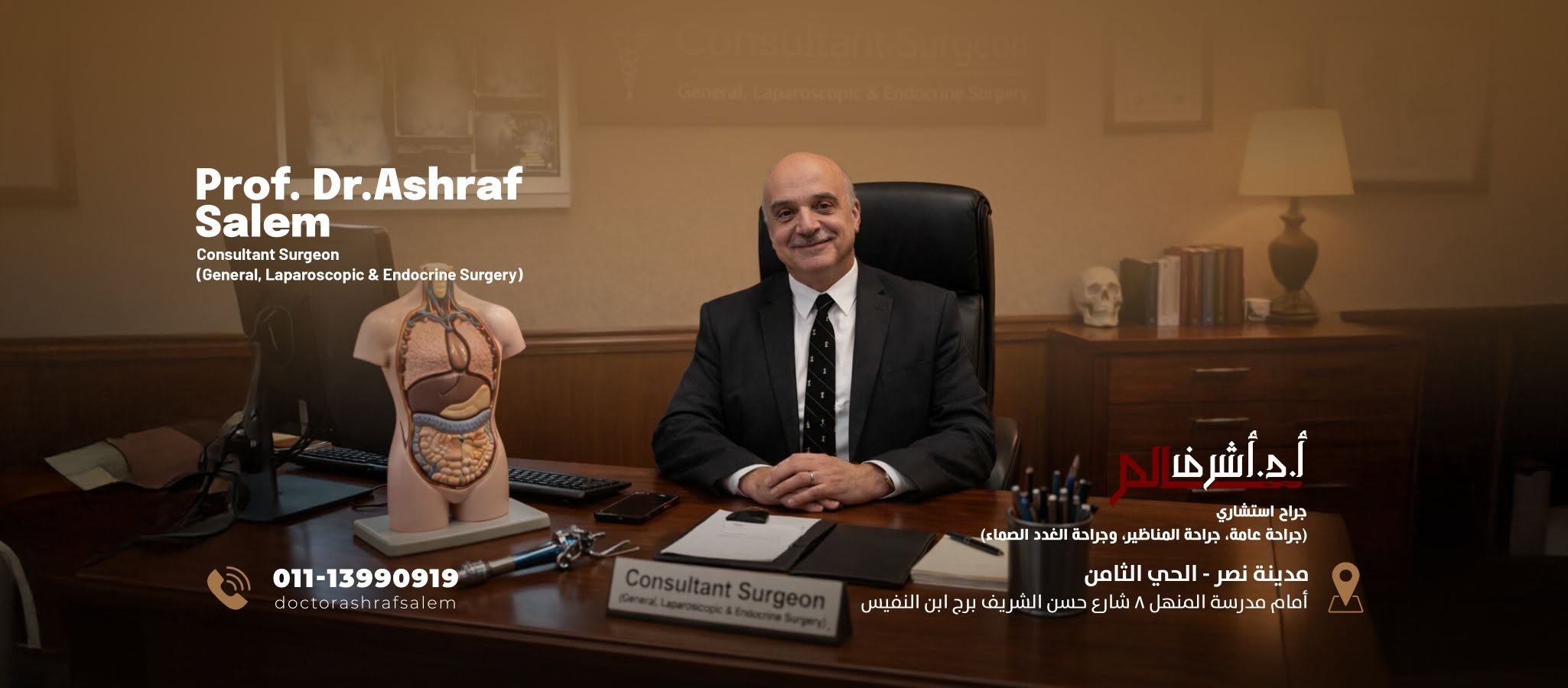
Excess Skin Removal
Addressing loose abdominal skin
Muscle Repair
When clinically indicated
Abdominal Contouring
Improving abdominal shape
Personalized Care
Individual assessment
UNDERSTANDING THE PROCEDURE
What Is a Tummy Tuck?
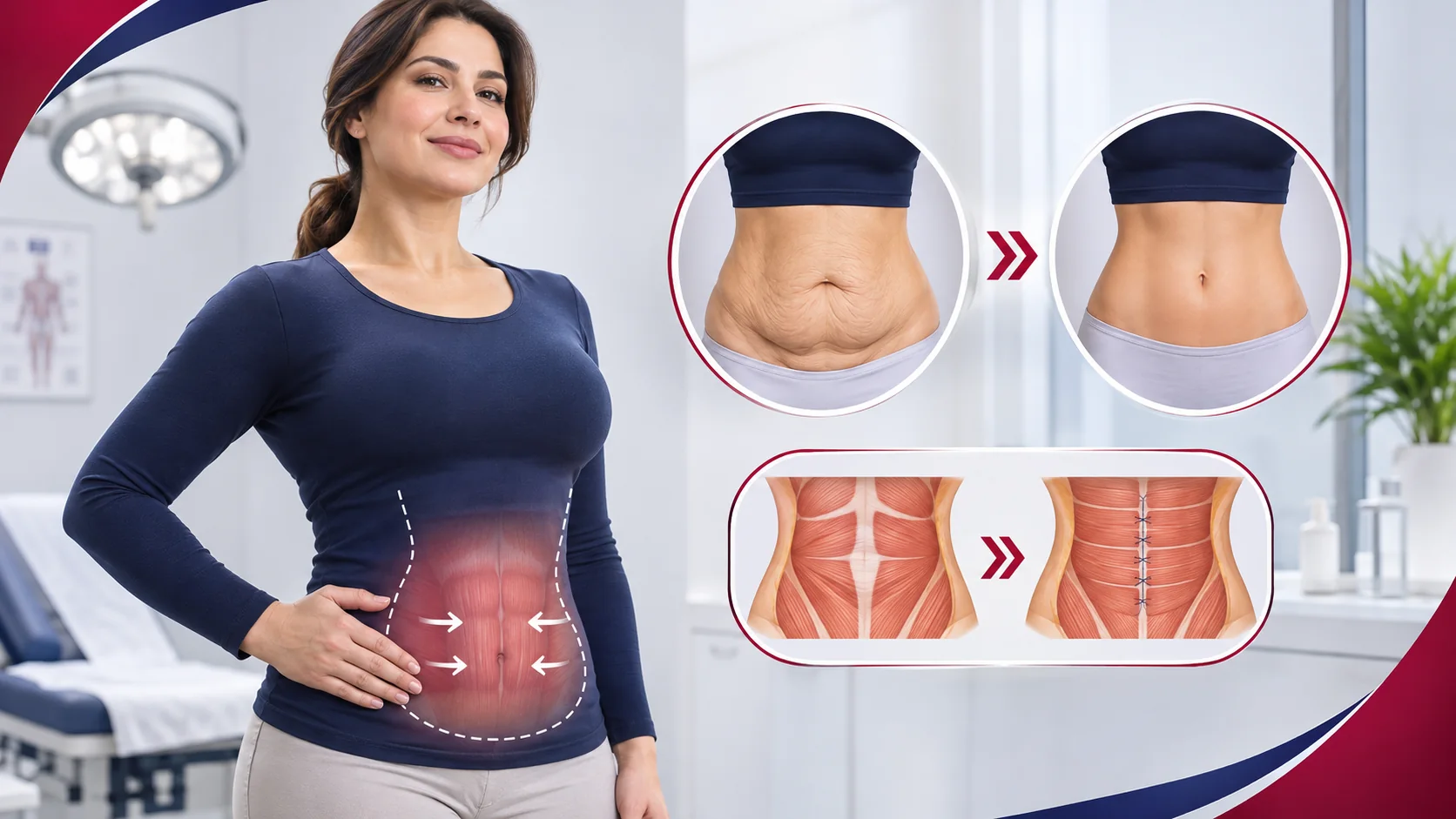
A tummy tuck, also known as abdominoplasty, is a surgical procedure designed to remove excess skin and selected fat from the abdominal area.
It may also involve tightening separated or weakened abdominal muscles, a condition known as diastasis recti, when clinically appropriate.
- Removal of excess abdominal skin.
- Repair of abdominal muscle separation when indicated.
- Improvement in abdominal contour.
- Individualized surgical planning.
PATIENT SELECTION
Who May Benefit from Tummy Tuck Surgery?
Abdominoplasty may be considered for selected patients experiencing persistent abdominal skin laxity or muscle separation.
01
After Pregnancy
Women experiencing loose abdominal skin or abdominal muscle separation following pregnancy.
02
After Weight Loss
Individuals with excess or hanging abdominal skin following significant weight reduction.
03
Muscle Separation
Patients with diastasis recti who may benefit from surgical muscle repair after assessment.
SURGICAL OPTIONS
Types of Tummy Tuck Procedures
Different abdominoplasty techniques are available. The appropriate procedure depends on the amount and location of excess skin and the patient's abdominal muscle condition.
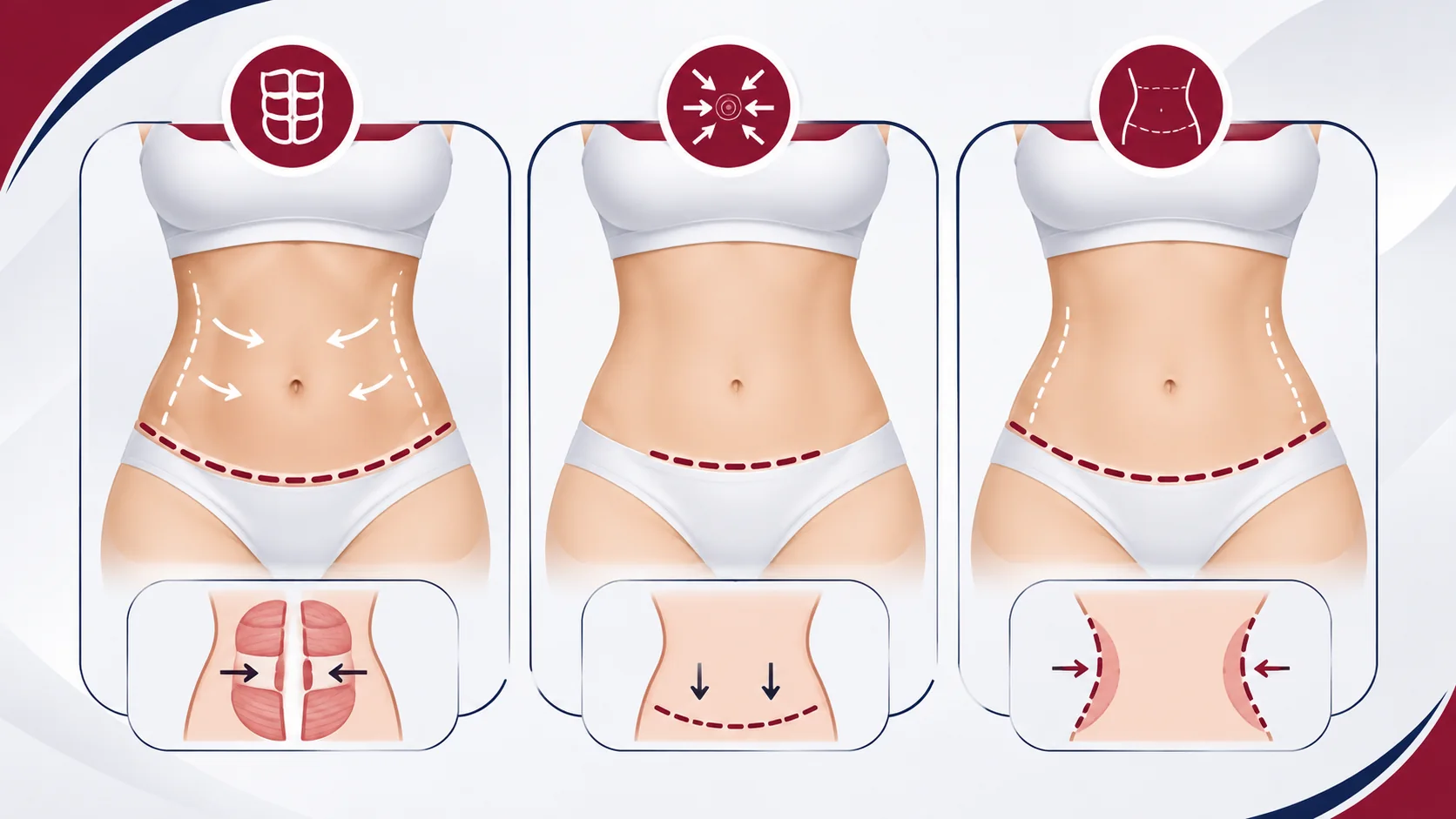
Educational illustration showing different approaches to abdominoplasty. The suitable technique is determined following an individual medical assessment.
Full Tummy Tuck
Addresses excess skin across the upper and lower abdomen and may include muscle repair.
Mini Tummy Tuck
Primarily targets excess skin in the lower abdominal area in suitable patients.
Extended Tummy Tuck
Addresses excess skin across the abdomen and may extend toward the flanks.
ABDOMINAL MUSCLE REPAIR
Tummy Tuck and Diastasis Recti Repair
Diastasis recti refers to the separation of the rectus abdominal muscles. It can occur following pregnancy or due to other factors affecting the abdominal wall.
In selected patients, abdominoplasty may include surgical repair of the separated abdominal muscles.
The need for muscle repair is determined during the surgical assessment.
Request a Consultation →
SURGICAL APPROACH
How Is Tummy Tuck Surgery Performed?
The procedure is planned according to the patient's anatomy and medical needs. It is generally performed under general anesthesia.
1
Preoperative Assessment
Evaluation of abdominal skin, muscle separation and medical history.
2
Surgical Planning
Selecting the appropriate incision and surgical technique.
3
Skin Removal and Muscle Repair
Removing selected excess skin and repairing separated muscles when indicated.
4
Closure and Follow-up
Wound closure and personalized postoperative care.
POSTOPERATIVE CARE
Recovery After Tummy Tuck Surgery
Recovery varies from one patient to another. Following postoperative instructions and attending follow-up appointments are important parts of the healing process.
Temporary swelling, bruising and discomfort may occur.
Gentle walking is usually encouraged as advised by the surgeon.
Compression garments may be recommended.
Heavy lifting and strenuous activities should be avoided until cleared.
Follow-up visits help monitor healing and recovery.

MEET YOUR SURGEON
Surgical Consultation with Prof. Ashraf Salem
Prof. Ashraf SalemProfessor of General and Laparoscopic Surgery.
A personalized consultation helps assess abdominal skin laxity, muscle separation, medical history and suitable treatment options.
Patients can discuss the potential benefits, limitations and risks of the procedure before making a treatment decision.
Contact the Clinic →
TREATMENT GOALS
What Can Tummy Tuck Surgery Address?
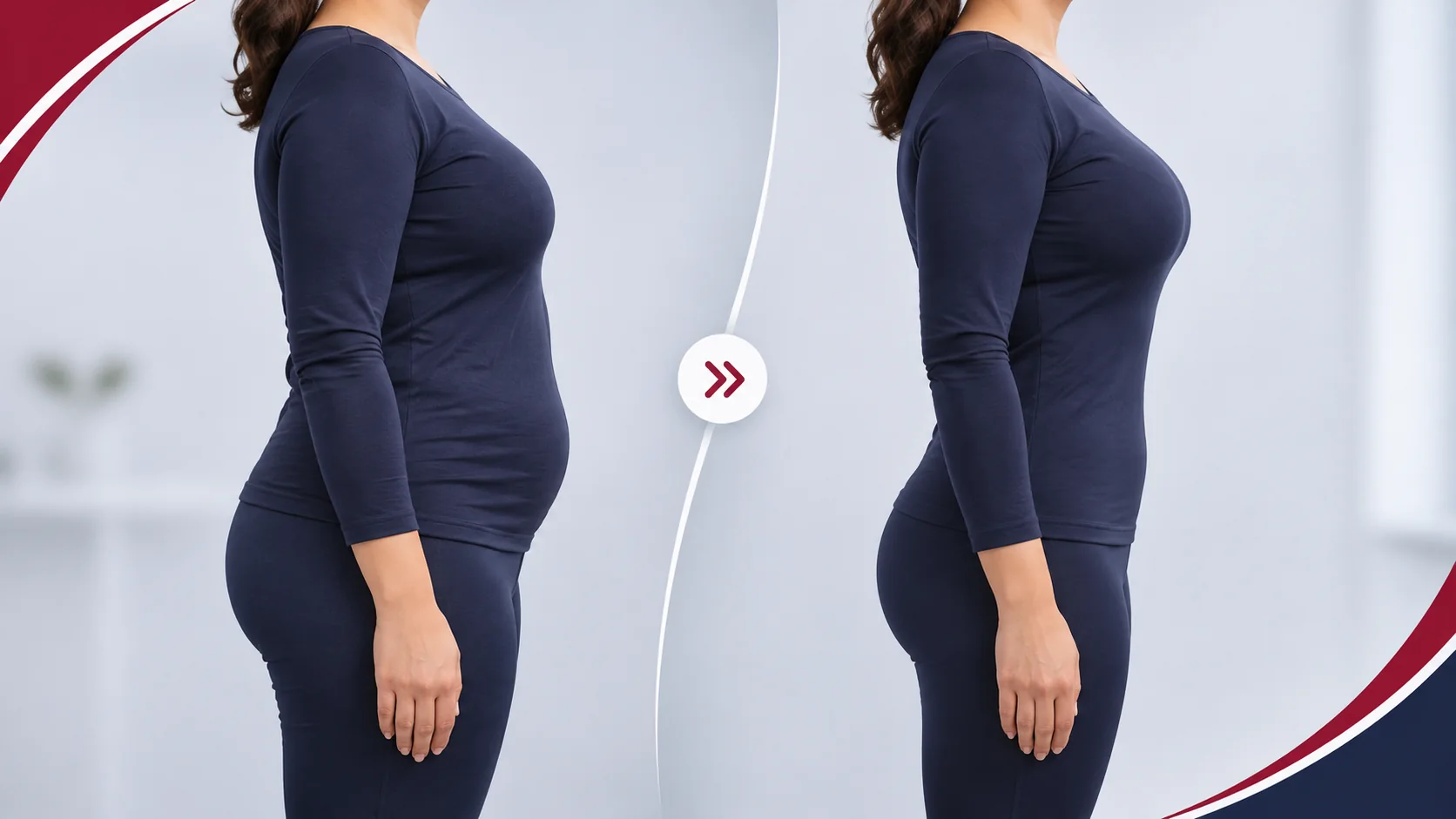
The goal of abdominoplasty is to improve abdominal contour by addressing specific skin and muscle concerns.
- Excess or hanging abdominal skin.
- Abdominal muscle separation when appropriate.
- Loose lower abdominal tissue.
- Abdominal contour concerns after pregnancy or weight loss.
PATIENT INFORMATION
Frequently Asked Questions About Tummy Tuck
Is a tummy tuck a weight loss procedure?
No. A tummy tuck is a body-contouring procedure
designed to remove excess abdominal skin and
address muscle separation when appropriate.
It is not a substitute for weight loss.
Does tummy tuck surgery repair separated abdominal muscles?
In selected patients, the procedure may include
repair of diastasis recti, a condition in which
the abdominal muscles have separated.
Will there be a scar after tummy tuck surgery?
Yes. Abdominoplasty involves surgical incisions,
usually positioned low on the abdomen.
Scar appearance and healing vary between patients.
How long does recovery take?
Recovery depends on the technique and individual
healing. Your surgeon will explain when you can
return to normal activities.
Can tummy tuck surgery be combined with liposuction?
In selected cases, liposuction may be combined
with abdominoplasty. Suitability depends on
the patient's anatomy and surgical risk.
Who is a suitable candidate for tummy tuck?
Suitability depends on overall health,
abdominal skin condition, weight stability,
expectations and medical assessment.
PERSONALIZED CONSULTATION
Considering Tummy Tuck Surgery?
Every patient has different needs. Arrange a consultation with Prof. Ashraf Salem to discuss your concerns and explore appropriate treatment options.
Book Your Consultation →
Medical Disclaimer:
This page provides general educational information
about abdominoplasty and is not a substitute for
professional medical advice, diagnosis or treatment.
Surgical risks, outcomes and recovery vary between
individuals. A qualified surgeon must assess each
patient before recommending surgery.
Illustrative images are for educational purposes
and do not represent actual patient results.